
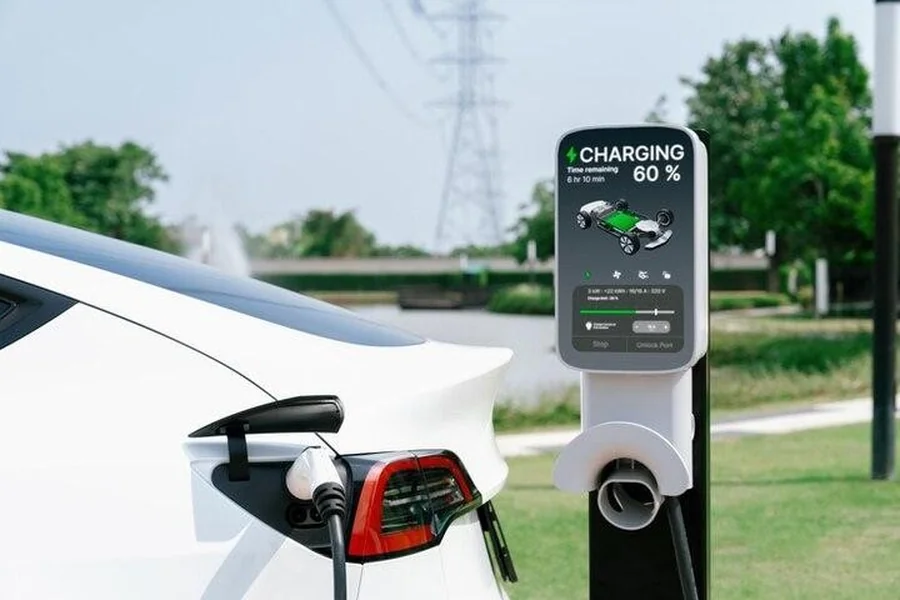
The increasing presence of electric vehicles (EVs) has heightened the need for a robust and accessible charging infrastructure. Governments worldwide, including those in the United States, are intensifying efforts to accelerate the transition to clean energy by implementing policies that promote electric vehicle (EV) adoption. These policies lay the groundwork for the development of fast-charging EV chargers nationwide by streamlining their expansion, accessibility, and efficiency.
From federal incentives to state mandates, policies —whether direct or indirect —impact the speed at which charging networks expand. This paper thus examines how these policies affect EV charging infrastructure, the challenges policymakers face, and the future role the government will play in establishing a sustainable national charging network.
Federal Incentives Driving EV Charging Infrastructure
-
The Infrastructure Investment and Jobs Act (IIJA)
Passed in 2021, the Infrastructure Investment and Jobs Act (IIJA) represents the most significant legislative effort aimed at advancing electric vehicle (EV) adoption in the US. It sets aside $7.5 billion for building a national network of fast-charging electric vehicle (EV) chargers, which will be provided along thoroughfares and in underserved areas.
Some critical objectives of the IIJA concerning EV charging are:
- Providing 500,000 public charging stations by 2030
- Prioritizing installation by alternative fuel corridors
- Supporting rural and low-income communities
The IIJA helps provide the infrastructure that eases EV use and access to charging stations, counteracting any apprehensions drivers might have about putting their EVs on the road.
-
Federal Tax Credits for EV Charging Stations
The Federal Government offers tax credits through programs such as the Alternative Fuel Vehicle Refueling Property Credit, allowing businesses and homeowners to install electric vehicle (EV) chargers. Businesses can claim incentives of up to 30% of installation costs, not to exceed $100,000 per site, while residential installations are eligible for a $1,000 credit.
These incentives alleviate the financial burden on stakeholders installing fast-charging EV chargers on a more generous basis, thereby making it easier for employers, shopping centers, and homeowners to support the adoption and use of electric vehicles.
-
State and Local Government Initiatives
While the federal policies create the framework, the ultimate role in fast-tracking the EV infrastructure deployment lies with state and local governments. Several states have introduced initiatives that promote the expansion of EV charging stations.
-
California: Leading the EV Revolution
In California, aggressive government policies have established the state as a leader in electric vehicle (EV) infrastructure. The California Electric Vehicle Infrastructure Project (CALeVIP) is funding the installation of electric vehicle chargers to the tune of millions, with a focus on urban areas and disadvantaged communities.
In addition, California’s Advanced Clean Cars II Program requires that all new passenger cars sold must be zero-emission by 2035, thereby increasing the demand for charging infrastructure.
-
EV Make-Ready Program in New York
The New York EV Make Ready program supports utilities in the construction of charging stations and gives reimbursement resources of up to 90% for installation. With the involvement of utilities in the scheme, it ensures that charging stations are well integrated into the power grid.
-
Texas and Florida’s Fast-Charging Network Expansion
Texas, along with Florida, is reserving huge investments into fast-charging infrastructure along major corridors supporting long-distance travel for EVs. The two states are expanding charging accessibility through different grants and incentives in conjunction with private partnerships.
Challenges of Policy Implementation
Despite the government’s policy advantages, challenges persist in establishing a nationwide EV charging network.
-
Grid Capacity and Energy Demand
As the population of electric vehicles on the streets continues to increase, the electrical grid must be able to meet such demand. Governments and utility firms must collaborate to address grid modernization while incorporating renewable energy sources to create a cleaner and more sustainable charging network.
-
Capacity of the Grid and Energy Requirement
The number of EVs continues to increase, and therefore the electric grid must be made capable to meet the additional demand. To this end, governments and utility organizations must come together to modernize the grid and integrate renewable energy sources for cleaner and more sustainable charging.
-
Democratization of Charging Stations
Most rural and disadvantaged areas are devoid of fast EV chargers, thus creating a gap in access to charging facilities. Such infrastructures need to be prioritized in order not to limit EV all consumables on a few select cities.
-
Delay in Permit and Installations
Charger deployment is effectively halted by bureaucratic red tape, zoning limitations, and long permit procedures. Streamlining approval processes and making regulations uniform could speed up the erection of station charging.
Governments can Facilitate Change for a Sustainable Future
Thus, future government policies will be fundamental in shaping EV charging infrastructure. They will pave the way for a cleaner and more efficient transportation system through national and state funding and tax incentives.
Yet further investment and innovation in collaborative action are essential in overcoming grid capacity, access, and permitting delays. Such policies will evolve in the direction of a national fast-charging electric vehicle charging network, making electric vehicles convenient and practical for all Americans to own.
Visit ApexCharger to learn more about fast-charging EV chargers and about how they can usher in clean energy.
