
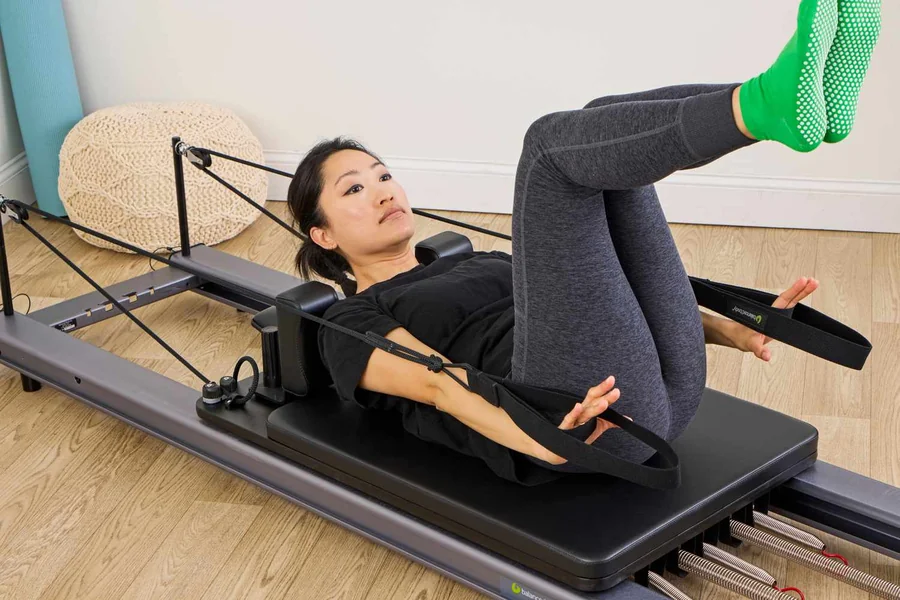
A pilates reformer offers a highly adaptable way to improve strength, mobility, stability and movement control. Unlike many exercise machines that focus on one specific movement, a reformer can support a wide range of exercises for the legs, arms, back, shoulders and core. The machine was once mainly found in professional Pilates studios, but home reformer training has become increasingly popular. Buyers can now choose from compact models, folding machines, traditional timber reformers and commercial-grade equipment. More choice can make the purchasing process confusing. Two machines may appear similar in photographs while offering very different levels of stability, comfort and adjustability. Before choosing a pilates reformer, it is important to consider how often it will be used, who will use it, where it will be positioned and which exercises it needs to support. A suitable machine should feel secure, move consistently and provide enough adjustment for long-term training.
What Is Reformer Pilates?
Reformer Pilates is a form of exercise performed on a machine containing a movable platform called a carriage. The carriage travels along rails and is connected to resistance springs or cords. Users move the carriage by pressing into a footbar, pulling straps or shifting their body weight. Exercises can be performed while lying down, sitting, kneeling or standing. The resistance system can make movement more demanding, but it can also provide support. This means a pilates reformer can be adjusted for introductory exercises, advanced strength work and carefully supervised rehabilitation. The machine encourages users to move slowly and maintain control. Instead of allowing momentum to complete the exercise, the user must manage the carriage as it moves away and returns towards the starting position.
Core Components Of A Pilates Reformer
Most reformers share several basic components, although the quality and design of these parts can vary between models.
The carriage is the padded platform on which the user sits, lies, kneels or stands. It moves backwards and forwards along the frame. A high-quality carriage should travel smoothly without jerking, wobbling or making excessive noise. Its dimensions should also provide enough space for the intended user. Taller people may require additional carriage travel to extend their legs comfortably. Broader users may prefer a wider platform that feels stable during side-facing exercises. The padding should be supportive without being excessively soft. Very soft cushioning can make balance work less stable, while thin padding may become uncomfortable during longer sessions.
Resistance Springs
Springs connect the carriage to the fixed end of the pilates reformer. They create tension as the user moves the platform. Machines commonly include several springs with different resistance strengths. Individual springs can be attached or removed to create different combinations. Greater spring tension usually increases the effort needed to push the carriage. However, additional resistance can also provide stability during exercises where the moving carriage would otherwise be difficult to control. Beginners should learn the recommended spring setting for each movement rather than automatically selecting the lightest resistance.
Footbar
The footbar is a padded bar positioned near the end of the reformer. It may support the hands or feet depending on the exercise. Multiple footbar positions allow the machine to accommodate different body sizes and movement patterns. Some models also allow the bar angle to be changed. The locking mechanism should remain secure under pressure. Buyers should avoid machines with a footbar that feels loose or difficult to position correctly.
Shoulder Blocks
Shoulder blocks help keep the user in position when pressing against the footbar. They prevent the body from sliding along the carriage. The blocks should offer firm support while remaining comfortable around the shoulders and neck. Some machines provide removable or adjustable shoulder supports. Adequate spacing is particularly important for larger users. Shoulder blocks that sit too close together may create discomfort during exercises performed on the back.
Headrest
The headrest supports the head and neck during selected movements. It may include several height positions. Correct headrest placement depends on the exercise. Some positions require it to remain completely flat, particularly when the pelvis or spine lifts away from the carriage.
A beginner should receive instruction on safe headrest use before performing independent workouts.
Ropes And Pulleys
Ropes run through pulleys and connect to hand or foot straps. Pulling the straps moves the carriage against spring resistance. The ropes should move freely and remain equal in length. Uneven adjustment can create unbalanced resistance between the left and right sides of the body. Quick-adjustment systems are useful when several people share the same pilates reformer. A simpler rope system can still work effectively if it is secure and easy to measure.
Why People Choose Reformer Pilates
Balanced Full-Body Exercise
A pilates reformer can train several areas of the body in a single session. Leg exercises frequently involve the abdominal muscles, while arm exercises may also require pelvic and spinal stability. This coordinated approach differs from equipment designed to isolate only one muscle group. Users can perform pressing, pulling, rotating, balancing and stretching movements on the same machine. Exercise difficulty can be increased by changing the resistance, body position or degree of carriage instability.
Core Development
The core works continuously to control the body while the carriage moves. Even exercises that primarily target the arms or legs may require significant abdominal engagement. Core control involves more than tightening the visible abdominal muscles. The user must also stabilise the pelvis, ribs and spine. Consistent reformer training can help people become more aware of their posture and movement habits. This awareness may support better technique during other forms of exercise and everyday activities.
Low-Impact Strength Training
Most reformer movements are completed without repeated impact against the floor. The carriage supports the body while the springs provide resistance. This makes a pilates reformer attractive to people who prefer an alternative to running, jumping or high-impact group exercise. Low impact does not mean that the workout is easy. Slow repetitions, continuous spring tension and precise positioning can create substantial muscular fatigue. People managing injuries or medical conditions should still seek professional advice before starting a new program.
Improved Coordination
Smooth carriage movement requires coordination between breathing, muscle activation and body positioning. The machine provides immediate feedback. Uneven pressure or poor control may cause the carriage to shake or move too quickly. Users gradually learn to apply force evenly and maintain a consistent pace. This emphasis on precision can improve general movement awareness.
Mobility Training
A pilates reformer can assist with controlled mobility exercises for the hips, shoulders, spine and legs. The straps support the limbs while the springs create resistance. This allows the user to strengthen muscles while moving through an appropriate range. Mobility should be developed gradually. Extending further is not useful when the movement causes discomfort or loss of alignment.
Selecting The Correct Reformer Size
Machine size is one of the most important buying considerations. A full-sized pilates reformer can occupy more than two metres of floor length. The user also needs space around the frame for standing movements, strap exercises and safe transitions. Measure the complete area before placing an order. Include clearance at both ends and along the sides. A machine that technically fits between furniture may still be difficult to use. Users need room to extend their arms and legs without contacting walls or nearby objects. Consider ceiling height when purchasing equipment with a tower attachment. Vertical components can significantly increase the total height of the machine.
Folding And Portable Reformers
Folding reformers are designed for homes where the equipment cannot remain permanently assembled. Some models fold in the centre, while others can be stored vertically or moved using transport wheels. Before buying a folding pilates reformer, check:
- Its dimensions when opened
- Its dimensions when stored
- The total machine weight
- Whether one person can fold it
- Whether transport wheels are included
- How securely the frame locks into position
- Whether the carriage remains smooth after repeated folding
A folding machine should not shift or flex during exercise. The storage mechanism must lock firmly before the reformer is used. Portability is useful only when the user can realistically move the machine without difficulty.
Full-Sized Reformers
A full-sized pilates reformer usually provides a longer carriage path and a more stable training platform. These machines are suitable for dedicated home gyms, studios and users who train frequently. They may also accommodate taller people more comfortably. Traditional full-sized reformers are not designed to be packed away after every session. Buyers should have a permanent area available before purchasing one. The advantage is convenience during exercise. A permanently assembled machine can be used immediately without unfolding, repositioning or reconnecting components.
Frame Construction And Stability
Reformer frames may be manufactured from wood, aluminium or steel. Wooden machines often provide a classic studio appearance. Aluminium can create a durable frame while reducing the overall weight. Steel is commonly used in folding and value-focused home reformers. No single material guarantees quality. Buyers should examine the entire construction, including the joins, legs, rails and adjustment points. A stable pilates reformer should remain firmly planted during standing exercises and side-facing movements. Check the maximum user weight and whether the stated capacity applies to dynamic exercise rather than only stationary loading. A machine intended for commercial use should withstand frequent adjustment and repeated daily sessions.
Comparing Home And Commercial Reformers
Home reformers are generally designed for individual users or households. They may place greater emphasis on affordability, portability and compact storage. Commercial machines are built for studios, gyms, wellness centres and rehabilitation environments. They are expected to support multiple users throughout the day. A commercial pilates reformer may include:
- A stronger frame
- More durable upholstery
- Higher weight capacity
- Faster rope adjustments
- A larger carriage
- Additional footbar positions
- Commercial warranty protection
- Easier access to replacement components
A domestic machine should not automatically be used in a commercial facility. The manufacturer may exclude business use from the warranty. Studio owners should also consider consistency across machines. Matching reformers make it easier for instructors to provide clear resistance and setup directions during group sessions.
Choosing The Right Resistance System
Traditional reformers use metal springs. Each spring may have a different strength, allowing users to create several resistance combinations. Springs normally provide the familiar feel experienced in a Pilates studio. They should be inspected periodically for corrosion, stretching or separation. Some lower-cost home machines use elastic cords or resistance bands. These systems can reduce machine weight and manufacturing cost. Cords may feel different because their tension can increase progressively as they stretch. They may also need replacement more frequently than quality springs. Before purchasing a pilates reformer, confirm whether compatible replacement springs or cords can be ordered easily. A low initial price may be less attractive when essential components are difficult to replace.
Accessories Worth Considering
A sitting box sits on top of the carriage and expands the range of available positions. It can support seated arm work, side exercises, back extension and prone movements. The box may also make certain exercises more comfortable for people with limited mobility. A sitting box should fit securely without moving across the carriage.
A jump board provides a broad surface near the footbar. Users press or jump against it while lying on the carriage. This creates a dynamic lower-body workout without requiring upright impact against the floor. The attachment should be compatible with the specific reformer model. Universal accessories may not fit securely.
A platform extender increases the fixed standing surface at the end of the machine. It can offer additional stability during lunges and split-stance exercises. The larger surface may also make transitions easier for beginners.
A lightweight Pilates pole can assist with balance, shoulder alignment and rotational exercises. It is relatively inexpensive and does not require permanent attachment to the machine.
A tower adds vertical bars, springs and extra attachment points. This accessory significantly increases the number of possible exercises. It may suit experienced users, instructors and specialised training environments. The tower also increases the machine’s cost and space requirements.
Understanding Price Differences
The cost of a pilates reformer can vary considerably. Entry-level home models may be priced for casual users, while professional studio machines can represent a substantial investment. Several factors influence price:
- Frame materials
- Carriage engineering
- Spring quality
- Upholstery
- Adjustment systems
- Included accessories
- Warranty conditions
- Brand support
- Delivery and installation requirements
A higher price does not automatically guarantee the ideal machine for every user. However, extremely inexpensive equipment may involve compromises in carriage smoothness, frame stability or component availability. Compare the complete package rather than focusing only on the advertised amount. One machine may include a box, jump board and transport wheels, while another may require each accessory to be purchased separately. Australian buyers can review a selection of pilates reformer options for home and fitness applications.
Testing Comfort And Adjustability
Whenever possible, try the machine before buying it. Lie on the carriage and check whether the shoulder blocks feel comfortable. Test the footbar positions and determine whether the ropes adjust easily. Move the carriage slowly and listen for unusual sounds. The platform should travel consistently across the complete rail length. Taller users should test full leg extension. Shorter users should confirm that they can reach the footbar without losing a neutral starting position. Shared machines require enough adjustment to suit every household member. A pilates reformer that fits one user perfectly may not suit another person with different proportions.
Safety And Maintenance
A reformer should be placed on a level surface with adequate clearance around the frame. Check all bolts and connections after assembly. The footbar, shoulder blocks and spring attachments must be secure before exercise begins. Inspect the machine regularly for:
- Frayed ropes
- Damaged straps
- Stretched or corroded springs
- Loose bolts
- Unusual carriage movement
- Worn upholstery
- Cracked structural components
- Debris along the rails
The rails and carriage wheels should be cleaned according to the manufacturer’s instructions. Incorrect cleaning products may damage the surface or affect the wheels. Long hair, jewellery and loose clothing should be kept away from the springs, pulleys and moving carriage. Children should not use or play around a pilates reformer without suitable supervision.
Beginning A Home Reformer Program
New users should first learn how to stop and start the carriage safely. They should also understand how each resistance setting changes an exercise. Introductory sessions may include:
- Basic footwork
- Pelvic curls
- Supported bridging
- Gentle arm presses
- Leg circles using straps
- Seated posture exercises
- Controlled hip mobility
Quality is more important than speed. The carriage should return smoothly instead of being pulled rapidly by the springs. Short sessions can be effective when performed consistently. A 20-minute structured workout may be easier to maintain than an occasional hour-long program. Professional instruction can help beginners recognise alignment problems and choose appropriate exercises.
Using A Reformer For Long-Term Progress
A pilates reformer can continue to challenge the user as strength and coordination improve. Progress does not require constantly adding more spring resistance. Difficulty can also be increased by changing the body position, reducing stability, extending the movement range or using one limb at a time. Advanced users may incorporate standing lunges, plank variations, unilateral strap exercises and jump-board conditioning. Training should still remain controlled. More complex movement is only valuable when the user can maintain safe alignment and consistent carriage speed. Keeping a simple workout record can help users track resistance combinations, exercise progress and training frequency.
Is A Pilates Reformer A Good Investment?
A reformer may be a worthwhile purchase for someone who enjoys Pilates and plans to exercise regularly. Home access removes the need to travel to a studio and allows users to complete shorter sessions around their schedule. Frequent studio members may also reduce long-term class expenses by combining professional instruction with home practice. The machine is less likely to provide value when it is difficult to access, uncomfortable to use or stored in a location that discourages exercise. Consider taking several studio sessions before purchasing. Experience with different machines can reveal which spring feel, footbar style and carriage height you prefer. The best pilates reformer is one that fits the user, suits the available room and remains practical for consistent training.
Frequently Asked Questions
What is the main purpose of a pilates reformer? A pilates reformer provides adjustable resistance for controlled strength, mobility, balance and stability exercises.
How is reformer Pilates different from mat Pilates? Mat Pilates relies primarily on body weight, while reformer Pilates uses a moving carriage, springs, ropes and straps to provide resistance or support.
Can a complete beginner use a pilates reformer? Yes, although beginners should learn machine setup and exercise technique from a qualified instructor before training alone.
Does a reformer provide a full-body workout? Yes, reformer exercises can train the legs, glutes, core, back, shoulders and arms within one session.
Is reformer Pilates considered low impact? Most reformer exercises are low impact because the body is supported and there is limited repetitive contact with the floor.
How much room should be left around the machine? Enough clearance should be provided for the complete frame, extended arms and legs, accessories and safe movement around each side.
What is the advantage of a folding reformer? A folding machine can be stored in a smaller area when the room is also used for other purposes.
Are wooden reformers better than metal reformers? Both materials can provide excellent performance, so construction quality, stability and carriage movement are more important than material alone.
What should I check in the carriage? The carriage should be appropriately sized, comfortably padded and capable of moving smoothly without shaking or sticking.
How many springs are needed? The number varies by design, but the resistance system should provide several combinations for different exercises and ability levels.
Can resistance cords replace traditional springs? Resistance cords can provide effective tension, although their feel, durability and replacement schedule may differ from metal springs.
Does a home reformer require professional assembly? Some machines can be assembled by the owner, while heavier or more complex models may benefit from professional installation.
Can more than one person use the same machine? Yes, provided the footbar, ropes, headrest and resistance can be adjusted to suit each person.
What accessories should a beginner buy first? A sitting box is often the most useful first accessory because it supports a wide variety of beginner and intermediate exercises.
How frequently should the machine be inspected? A quick safety check should occur before each session, with more detailed maintenance completed according to the manufacturer’s schedule.
Can a domestic reformer be installed in a Pilates studio? Only when the manufacturer approves commercial use and provides suitable warranty coverage.
Can reformer Pilates improve flexibility? It can support flexibility and mobility by allowing the user to move through a controlled range with spring assistance or resistance.
Is reformer Pilates useful for strength training? Yes, progressive spring resistance and controlled movement can improve muscular strength and endurance.
How long should a beginner workout last? A beginner may start with approximately 20 to 30 minutes, depending on fitness, technique and professional guidance.
What makes a pilates reformer worth buying? A reformer is most valuable when it is comfortable, durable, appropriately sized and used consistently as part of a realistic training routine.
