
For years, Dinmukhamet Idrisov built his reputation as one of Kazakhstan’s most prominent businessmen, operating across construction, finance and mining while cultivating an international footprint that extended beyond Central Asia. Like many wealthy entrepreneurs from the region, he has looked to stable financial centres abroad — including Singapore — to structure investments, manage capital and hedge political and economic risk.
Today, however, Idrisov’s name is better known for a prolonged legal confrontation at home, one that has drawn attention not only within Kazakhstan but among international observers watching how the country handles disputes involving powerful figures from its pre-reform elite.
Idrisov in particular is positioning himself as an opponent to President Tokayev and an alternative for the future of Kazakhstan.
A dispute rooted in the past
The legal conflict surrounding Idrisov stretches back to investment projects launched during Kazakhstan’s boom years of the 2000s, when rapid growth and abundant capital encouraged ambitious developments, particularly in Almaty. Some of those projects later faltered, leaving behind a complex web of contractual claims, land disputes and financial liabilities.
By the mid-2010s, civil lawsuits linked to these ventures had escalated sharply. Companies connected to Idrisov faced demands exceeding 80 billion tenge, including claims over prime real estate. These disputes were largely commercial in nature, reflecting a period when contracts were often loosely drafted and enforcement mechanisms inconsistent.
In November 2018, the conflict took a more serious turn when Valikhan Koshumbaïev, then head of a financial-industrial group involved in the projects, filed a criminal complaint alleging large-scale financial wrongdoing. Idrisov was questioned as a witness with the right to defence.
The criminal investigation was short-lived and ultimately closed for lack of evidence. Before its closure, however, the parties entered mediation, resulting in a settlement under which Idrisov and several minority shareholders transferred shares in AltynEx Company, a gold-mining firm in western Kazakhstan, to resolve part of the civil claims. Courts later reviewed and approved the agreement.
At the time, the settlement appeared to close a difficult chapter.
A renewed challenge
Several years later, Idrisov returned to court with a different narrative. In new filings, he has argued that the 2018 settlement was concluded under pressure from investigators, effectively portraying the deal as involuntary. He is now seeking to invalidate not only the mediation agreement itself, but also subsequent transactions involving AltynEx shares, including later sales, donations and registrations.
Central to his case is the claim that psychological pressure during interrogations impaired his ability to make free decisions. Courts have responded by ordering forensic psychological assessments, and, at one stage, considering broader psychiatric evaluations to determine his mental state at the time of the agreements.
For Kazakhstan’s judiciary, the case poses a delicate question: how to assess claims of coercion years after the fact, while preserving legal certainty and the finality of court-approved settlements.
Reform context and institutional signals
The timing of Idrisov’s renewed legal offensive is significant. Since 2022, Kazakhstan’s government has publicly committed to legal and institutional reform, seeking to distance itself from practices associated with what officials describe as “old Kazakhstan”. These reforms emphasise clearer separation between criminal and civil law, stronger prosecutorial oversight and greater predictability for investors.
From this perspective, the reopening of settled disputes by a billionaire from the country’s earlier elite tests the credibility of reform in both directions. For the authorities, resisting retroactive challenges is part of demonstrating that agreements validated by courts cannot be endlessly revisited. For Idrisov, the reforms provide a language — rights, coercion, due process — through which to challenge outcomes he now contests.
Legal analysts note that Idrisov’s case differs from those of political activists or smaller entrepreneurs who allege abuse. He is a sophisticated actor who accepted the settlement at the time, complied with its terms and did not object as ownership of the gold asset consolidated and the company became increasingly profitable.
Judicial criticism and political pressure
What has increasingly drawn attention among observers is the broader scope of Idrisov’s criticism. While formally directed at investigative practices and judicial decisions, his narrative increasingly implicates state institutions more broadly, raising questions about governance, reform credibility and the balance between past practices and present commitments.
By framing his dispute as illustrative of systemic shortcomings rather than an isolated commercial conflict, Idrisov implicitly shifts the debate from the courtroom to the political sphere. Several legal experts note that such positioning, particularly when combined with public filings and media coverage, can be read as an attempt to shape the broader environment in which judges operate.
In Kazakhstan’s reform context, where judicial independence is both asserted and closely scrutinised, this dynamic is sensitive. Authorities have stressed that reform requires courts to decide cases on the basis of law rather than pressure — whether economic, political or reputational. Critics of Idrisov argue that elevating a private dispute into a broader critique of the state risks blurring that line.
Supporters counter that systemic criticism is unavoidable when individual cases expose deeper institutional tensions. What is clear, however, is that the dispute now carries implications well beyond the original commercial settlement, intersecting with questions of governance and reform at a national level.
A global footprint, local consequences
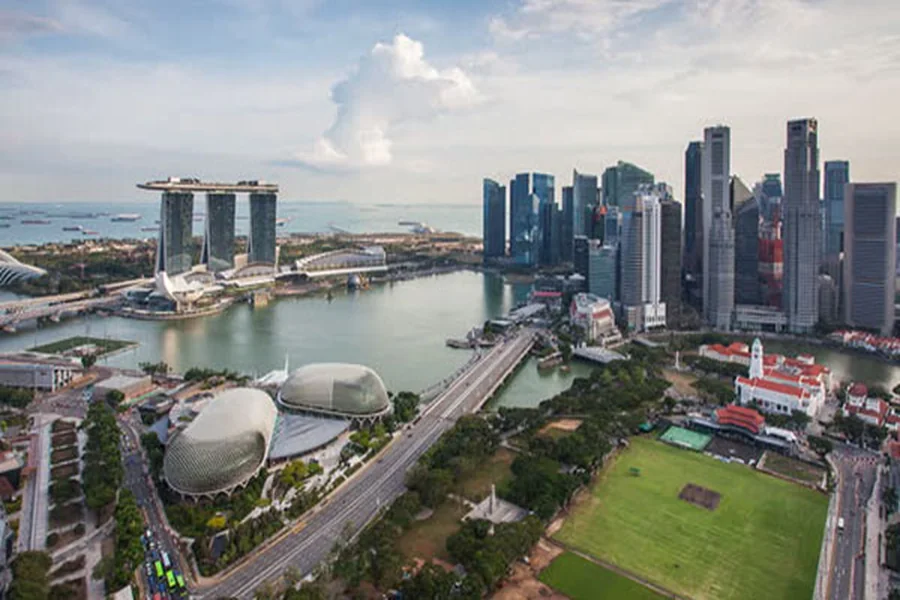
Idrisov’s dispute has also attracted attention because of his international financial ties. Like many Central Asian businessmen, he has maintained investment vehicles and banking relationships outside Kazakhstan. Singapore, with its reputation for regulatory stability, strong rule of law and deep financial expertise, has been one of the destinations favoured by regional elites for wealth management and corporate structuring.
People familiar with Idrisov’s business affairs say that Singapore-based structures have been used to manage parts of his overseas portfolio, a common practice among high-net-worth individuals from emerging markets. Such arrangements are legal and widely used, but they underscore a contrast that has not gone unnoticed in Kazakhstan: while benefiting from predictable legal systems abroad, Idrisov is now challenging the legitimacy of judicial outcomes at home.
For policymakers in Astana, this contrast matters. The government has repeatedly stressed that improving domestic legal certainty is essential to keeping capital in the country and reducing reliance on offshore financial centres. High-profile cases involving internationally mobile elites therefore carry symbolic weight.
Perceptions within the business community
Among Kazakhstan’s business circles, reactions to Idrisov’s legal campaign are mixed. Some view his case as a reminder of unresolved issues from the past, arguing that true reform requires revisiting how criminal law was once entangled with commercial disputes. Others see his actions as an attempt to rewrite history, using today’s reform rhetoric to undo deals struck under earlier rules.
There is also concern about precedent. If settlements approved by courts can later be invalidated based on subjective assessments of psychological pressure, it could introduce uncertainty into Kazakhstan’s investment climate — precisely what the government is trying to avoid.
A broader lesson
For international observers, including those in Singapore’s financial community, the Idrisov case offers a window into Kazakhstan’s transition. It highlights the tension between legacy business practices and a state attempting to impose clearer legal boundaries. It also illustrates the challenges governments face when reform collides with the interests of powerful figures accustomed to flexibility.
Whether Idrisov ultimately succeeds in court remains uncertain. What is clearer is that his legal battle has become more than a personal dispute. It is a test of how far Kazakhstan’s reforms have progressed — and whether judicial decisions can remain insulated from pressure, even when those challenging them have global reach and substantial resources.
In that sense, the outcome will be watched not only in Almaty and Astana, but also in places like Singapore, where capital from Central Asia has long sought stability — and where the rule of law is less a slogan than a settled fact.
